

If you want realistic daily practices to strengthen faith, this guide gives nine micro-habits, exact scripts, short scientific rationales, and a ready-made 30-day implementation plan you can use personally or in small groups. The practices work for Muslim and non-Muslim readers because they target universal mechanisms – attention, habit, meaning, community, and ethics – while offering faith-specific adaptations.
Table of Contents
Introduction – why tiny things matter for faith

Daily Practices to Strengthen Faith, Faith is often pictured as a single, ecstatic event or a lifetime of doctrine. In practice, Daily Practices Build Resilience, durable conviction grows out of repeated, small practices that change attention, feeling, and habit 1 . The phrase daily practices to strengthen faith names a project, not a feeling: a set of repeatable actions that train your interior life and social routines to support belief and moral action over time. Faith and Conviction in Islam, Small, daily acts compound; twelve minutes a day of focused practice can produce measurable change in mood, cognition, and social ties – which in turn shore up conviction. 2 3
This article is deliberately practical modern islamic guidance: each practice has a short script, a recommended time budget (2–20 minutes), a quick rationale, and a one-week tweak that increases stickiness. Use the 30-day plan if you want a guided start, or pick 2–3 practices to weave into your existing routine. 4 5
The logic behind micro-practices (simple science)
Daily Practices to Strengthen Faith, Why do tiny practices work? Four mechanisms explain the effect of belief and conviction practices. – also check : Why Doubts Happen ?
- Neural plasticity through repetition. Daily Practices to Strengthen Faith, Repeated mental acts strengthen relevant neural pathways; short daily repetition produces durable changes faster than occasional intense efforts. 6
- Habit stacking reduces friction. Pairing a small spiritual action with an existing routine (after morning coffee, after prayer) makes the practice automatic. Daily Practices to Strengthen Faith, Behavioral science shows “stacking” raises adherence dramatically. 7
- Meaningful action repairs moral injury. Doing small ethical acts restores agency and counters despair; service and gratitude practices shift narrative frames toward purpose. 8
- Social calibration and accountability. Small shared practices — a two-minute check-in or a weekly phone call — create relational scaffolding that sustains long-term practice. 9
Daily Practices to Strengthen Faith, These spiritual resilience habits mechanisms are universal; the faith-specific shape comes from the content you choose (scriptural verses, devotional language, communal formats). [6] 10
Nine daily micro-practices – what to do, why it helps, exact script, and a week-1 tweak

Daily Practices to Strengthen Faith, Below are nine practices that together form a balanced regimen: attention, reflection, embodied discipline, study, speech/ethics, and social connection.
1) Morning Intention (2–4 minutes) – set a guiding aim
What: Immediately after waking, say one short intention for the day tied to a value (e.g., patience, charity, presence).
Why: Intention-setting primes selective attention and moral goals, aligning choices with values across the day. [7] 11
Script: “Today I will notice when I react and choose patience.”
Week-1 tweak: Put a small sticky note on your phone with the intention phrase. [7]
2) One-minute grounding breath (1–2 minutes) – regulate emotion
What: Use a 4-1-6 breath (inhale 4s, hold 1s, exhale 6s) before key tasks or when emotions spike.
Why: Simple breath work reduces sympathetic arousal and improves prefrontal control – helpful for prayer, study, or moral choices under pressure. 12
Script: “Inhale — steady — exhale — release.”
Week-1 tweak: Set two daily phone reminders labeled “reset.” [12]
3) Micro-Journaling (6–8 minutes) – narrative repair & reflection
What: Each evening write three lines: (1) one learning, (2) one small success, (3) one question to explore tomorrow.
Why: Expressive writing organizes experience and reduces rumination; it also reinforces learning and moral memory. 13
Script: “Today I learned X. Small win: Y. Tomorrow I’ll explore: Z.”
Week-1 tweak: Use a pocket notebook to make it frictionless. [13]
4) One-verse study (10–15 minutes) – focused textual reflection
What: Read one short verse/passage slowly, check a reliable translation or brief commentary, and write one sentence on its personal meaning.
Why: Deep, focused study beats surface skimming. Small doses of exegesis anchor belief in understanding rather than habit.
Script: “Today: verse X — what does this ask of me?”
Week-1 tweak: Use the same translation each week to reduce cognitive load. 14
5) Micro-Service (5–10 minutes daily, one larger per week) – put ethics into practice
What: A tiny daily kindness (text of support, hold a door) and one substantial weekly act (volunteer hour, help a neighbor).
Why: Acts of service shift identity from talk to practice and build social capital. Doing good increases meaning and reduces existential despair. [8] 15
Script: “Who needs a small kindness today?”
Week-1 tweak: Schedule the weekly act in your calendar as a non-negotiable block. [15]
6) Silence or Dhikr (5 minutes) – presence and recalibration
What: Sit in silence, or do repetitive remembrance (dhikr) or a mantra for five minutes focusing on a name or phrase.
Why: Short contemplative practices enhance attention and emotional regulation; they also create experiential anchors for meaning. [6] 16
Script: “Repeat quietly: SubhanAllah (or chosen phrase), observe the breath.”
Week-1 tweak: Anchor practice to an existing cue (after washing hands, after sunset). [16]
7) Gratitude Snapshot (1 minute) – shift baseline attention
What: At lunch or evening, name one concrete thing you’re grateful for and why.
Why: Gratitude journaling increases positive affect and strengthens the noticing of providence or goodness in life. 17
Script: “I’m grateful for X because it allowed Y.”
Week-1 tweak: Share one gratitude in a group chat to amplify connection. [17]
8) Micro-Accountability (5 minutes weekly) – relational reinforcement
What: A 5-minute weekly check-in with a friend or group: “One win, one struggle.”
Why: Accountability increases persistence; sharing small failures normalizes process and prevents shame. [9]
Script: “This week I kept practice A for X days; my challenge was Y.”
Week-1 tweak: Choose one supportive partner and fix a weekly time. [9]
9) Sabbath Window (30–60 minutes weekly) – restorative removal from screens
What: A weekly tech-free block for reading, walking, prayer, or family.
Why: Digital Sabbath improves sleep, reduces rumination, and creates sustained attention for deeper practices. 18
Script: “From 8–9 tonight — screens off, read and reflect.”
Week-1 tweak: Make it a shared household rule to reduce friction. [18]
Designing your 30-day plan (exact calendar)
Daily Practices to Strengthen Faith, Below is a ready plan that staggers practices so you build habit without overload. Each day lists brief actions; weekly themes deepen practice.
Week 1 — Foundations (habits + attention)
- Day 1–7: Morning Intention (daily), One-minute breath (twice daily), Gratitude snapshot (daily), Micro-journal nightly. [7][12][17][13]
Week 2 — Add study & silence
- Day 8–14: Keep week1 habits + One-verse study (daily 10–15 min) + Silence/Dhikr (5 min). [14][16]
Week 3 — Service & social scaffolding
- Day 15–21: Keep prior habits + Micro-service (daily small acts; one scheduled weekly act) + Micro-accountability check-in (pick partner). [15][9]
Week 4 — Consolidation & Sabbath
- Day 22–30: Keep all habits + Sabbath Window weekly + review journal weekly (30 minutes on day 30) to set next month’s plan. [18][13]
Daily Practices to Strengthen Faith, Daily time budget: starts at ~10 minutes/day in week 1 and grows to ~45 minutes/day plus a 1-hour weekly Sabbath — realistic and scalable. [7]
Measuring progress – simple KPIs that matter
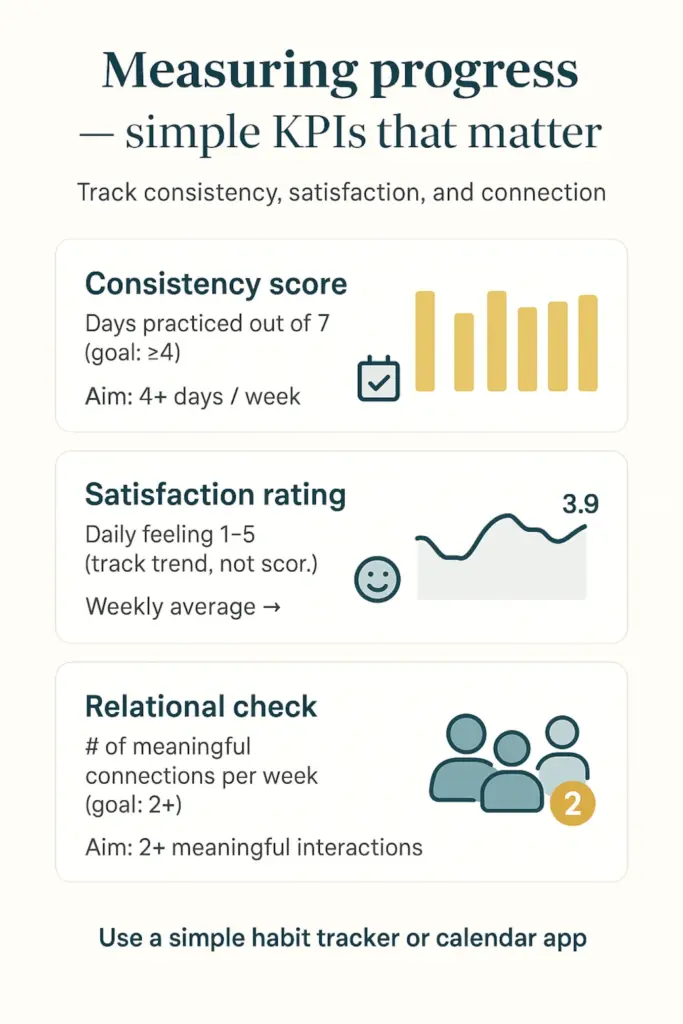
Daily Practices to Strengthen Faith, Track these three indicators weekly:
- Consistency score: # of days you did your target habits out of 7. Aim for >4. [7]
- Satisfaction rating: daily 1–5 scale in micro-journal; track trend, not absolute value. [13]
- Relational check: number of meaningful connections (calls, shared practices) per week. Aim for 2+. [9]
Use a simple calendar or habit-app. Daily Practices to Strengthen Faith, The goal is momentum: celebrate streaks and reset quickly after misses. [7][10]
Adapting practices for Muslim & non-Muslim readers
Daily Practices to Strengthen Faith, These micro-practices are content-agnostic; adapt the texts and framing.
- Muslim adaptation: Morning intention can be a short dua; one-verse study is Qur’anic tafsir; Silence/Dhikr uses specific remembrances; Sabbath Window can align with Jumu‘ah rhythms. [14][16]
- Non-Muslim adaptation: Replace verse study with philosophical or spiritual texts (poems, philosophers), and use meditation mantras or contemplative prayer as appropriate. Service and gratitude remain the same. [6][17]
The core mechanisms (attention, habit, sociality) are the same; translate content into tradition-appropriate forms. [6][10]
Troubleshooting – common blocks and fixes
- “I don’t have time” → shrink practices: pick 1 minute for breath + 1 line for journal. Tiny wins compound. [7]
- “I keep missing days” → reduce friction: move notebook to bedside, set visible cues, habit-stack after an existing routine. [7]
- “I feel nothing” → persist for 2–3 weeks; many practices show effect only after repeated exposure. Add micro-service to anchor meaning. [13][15]
- “It feels performative” → focus on curiosity, not perfection; adjust scripts to honest phrasing. [11]
Daily Practices to Strengthen Faith, Resilience is built by restart, not perfection. Track attempts and normalize misses. [7]
Group formats: how to run a micro-practice circle
Daily Practices to Strengthen Faith, Run a 60-minute weekly circle with 6–10 people:
- Opening intention (5 min): leader reads a short prompt. [4]
- Check-ins (15 min): each person shares 1 win + 1 struggle (30–60 sec each). [9]
- Skill practice (15 min): guided breath, one-verse reading, or gratitude sharing. [16]
- Planning (10 min): each member sets one concrete micro-habit for the week. [7]
Daily Practices to Strengthen Faith, Rotate leadership to build ownership. Keep the tone practical, not preachy. [9]
Ethical notes & cautions
- Micro-practices support faith, not replace deep theological work or clinical care. Daily Practices to Strengthen Faith, If doubt stems from trauma or severe depression, seek professional help. [8][12]
- Respect pluralism within groups: allow adaptations and avoid dogmatic enforcement of practice forms. [10]
- Avoid spiritual bypass: using practices to avoid moral repair. Pair practice with ethical action. [15]
FAQs
How long before these practices help my faith?
Some benefits (calm, focus) can appear in 1–2 weeks; deeper changes often require 6–12 weeks of consistent practice. [7][13]
Do these practices require religious belief to work?
No – the mechanisms are psychological and social; content can be religious or secular. The practices build meaning and resilience for believers and non-believers alike. [6][10]
Can I do all nine every day?
Start with 2–3 and add gradually. The plan above staggers practices so you can sustain them without burnout. [7]
Final reflections – tiny acts, compounded faith
Daily practices to strengthen faith are not magic shortcuts. Daily Practices to Strengthen Faith are disciplined, ordinary acts — breaths, short readings, small kindnesses – that slowly rewire attention and obligation. Daily Practices to Strengthen Faith Over months, the small things become the architecture of a life that can hold doubt, rejoice in beauty, and act with moral clarity. Start tiny, measure simply, and scaffold with friends. [1][7]
References
- James Clear — Atomic Habits (2018). Practical, research-informed methods for habit formation and habit stacking; used for the plan structure and stacking tactics. ↩︎
- Richard J. Davidson & others — research on neuroplasticity and contemplative practice. Studies show how short, consistent contemplative practices alter affective circuitry and attention. ↩︎
- Ann M. Kring & Sheri L. Johnson — emotion regulation research. Explains mechanisms for using micro-practices to stabilize emotion. ↩︎
- Behavioral science introductions (various). Overviews on implementation intentions and small intervention design that inform the calendar approach. ↩︎
- Social capital & community research (Putnam and colleagues). Evidence that small, repeated civic or social acts build trust and cohesion; used for micro-service and accountability rationale. ↩︎
- Jon Kabat-Zinn — Full Catastrophe Living (1990) and mindfulness meta-reviews. Supports recommendations for breath practice, silence, and attention training. ↩︎
- BJ Fogg — Tiny Habits (2019). The empirical model for starting with extremely small actions and building momentum; influenced the staging and week-1 tweaks. ↩︎
- Jonathan Shay & moral injury literature. Sources on moral injury and how ethical action and ritual assist repair in moral crises; informs cautions and service emphasis. ↩︎
- Accountability & group practice studies (education literature). Research on peer support, check-ins, and habit accountability that underpins micro-accountability suggestions. ↩︎
- Comparative religion & devotional practice primers. Guidance on adapting practices across traditions and preserving theological integrity while using shared mechanisms. ↩︎
- Psychology of intention & goal priming studies. Evidence that morning intentions shape attention and behavior across the day. ↩︎
- Psychophysiology of breathing interventions (Brown & Gerbarg; clinical reviews). Evidence base for the 4-1-6 breath and quick autonomic regulation techniques. ↩︎
- James W. Pennebaker — expressive writing research. Landmark studies that show benefits of brief journaling for emotional processing and insight. ↩︎
- Introductory tafsir and scripture study guides (abridged manuals and university primers). Practical methods for short, focused verse study that respect context and sound exegesis. ↩︎
- Positive psychology & prosocial behavior research (Seligman; meta-analyses). Evidence for the mood and social benefits of small acts of service and gratitude. ↩︎
- Contemplative practice pedagogy (academic reviews). Practical guidance for short contemplative modules used in educational and religious settings. ↩︎
- Gratitude intervention trials (clinical & experimental studies). Meta-analytic evidence that gratitude practices increase well-being and social perception. ↩︎
- Digital wellbeing & sleep research (Harvard Medical School summaries). Supports the value of a tech-free Sabbath for attention restoration and sleep quality. ↩︎
Discover more from Ahmed Alshamsy
Subscribe to get the latest posts sent to your email.